
John Fell House, New Jersey: A Revolutionary Landmark Rooted in History
Nestled in the heart of Allendale, Bergen County, New Jersey, the John Fell House stands as a treasured monument to America’s Revolutionary past. Though modest in appearance compared to grand colonial estates, this historic home carries a legacy far greater than its size suggests. From its 18th-century construction to its crucial role in the American Revolution—and its ongoing preservation as a museum—the John Fell House represents the spirit of patriotism, resilience, and community that helped shape the United States.
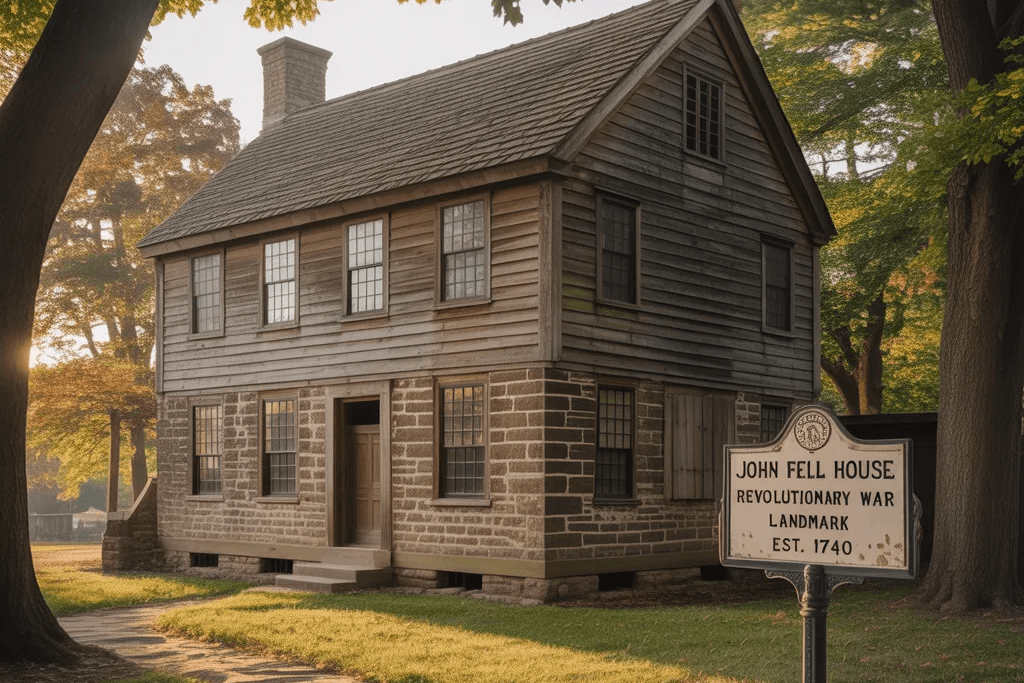
This blog explores the origins of the John Fell House, the life of John Fell himself, the home’s role in the Revolutionary War, its architectural features, preservation efforts, and why it remains an essential historic destination today.
The Origins of the John Fell House
The John Fell House was built in 1754, during a time when the American colonies were still under British rule. Located in what was then part of a largely rural and agrarian region, the home reflects the lifestyle and values of mid-18th-century colonial America. The structure was constructed in the Georgian style, common in colonial architecture, characterized by symmetry, proportion, and functional design.
Though the home may appear modest compared to some colonial mansions, it was a symbol of prominence in its community. The Fell family was well-respected, and their home served as both a private residence and a center of social and political activity.
The property’s location in Bergen County placed it in a region that would soon become strategically significant during the Revolutionary War. At the time, New Jersey was often called the “Crossroads of the Revolution,” due to its central location between New York and Philadelphia—two critical cities in the war.
Who Was John Fell?
To understand the importance of the John Fell House, one must first understand the man behind it.
John Fell (1721–1798) was a prominent patriot, businessman, and public official. Born into a family of means and influence, Fell became deeply involved in colonial politics and the growing resistance against British rule. He was known for his strong support of American independence and for using his influence and resources to assist the Revolutionary cause.
Fell served as a member of the New Jersey General Assembly and later as a delegate to the Continental Congress. His political involvement put him in direct opposition to British authority, making him a target during the war.
Beyond politics, Fell was also a community leader. He helped establish churches, supported local development, and contributed to the civic life of the region. His home naturally became a gathering place for fellow patriots and local leaders.
A Safe Haven for George Washington
One of the most significant chapters in the history of the John Fell House occurred during the American Revolutionary War.
In 1778, General George Washington used the John Fell House as his headquarters for several days. During this period, Washington was maneuvering his troops through northern New Jersey as part of the broader campaign against British forces. The house provided a secure and strategically located base of operations.
Washington’s presence elevated the house’s importance in Revolutionary history. It was within these walls that military strategies were discussed and plans were refined. The fact that Washington chose to stay at the home of John Fell speaks volumes about Fell’s status and reliability as a patriot leader.
This moment in history firmly cemented the house’s place as a Revolutionary War landmark.
British Retaliation and Destruction
John Fell’s outspoken support for independence did not go unnoticed by British forces. In fact, his loyalty to the American cause made him a target.
During the war, British troops captured John Fell and imprisoned him in New York City. His arrest was part of a broader British strategy to suppress influential patriot leaders and weaken colonial resistance. Fell’s imprisonment was a personal sacrifice that demonstrated his commitment to American independence.
While Fell endured captivity, his property was not spared from British hostility. His home suffered damage during military activity in the area. Many patriot homes in New Jersey faced similar fates, as the state saw more battles and skirmishes than almost any other colony.
Despite these hardships, Fell survived the war and returned home after the American victory. His resilience mirrored that of the new nation.
Architectural Features of the Home
The John Fell House is an excellent example of mid-18th-century colonial architecture. Built primarily from local sandstone, the structure reflects practical craftsmanship and durability.
Key architectural features include:
- Symmetrical façade typical of Georgian design
- Steeply pitched roof
- Thick stone walls, providing insulation and strength
- Original fireplaces used for cooking and heating
- Wood-beamed ceilings
- Handcrafted woodwork and flooring
The interior layout reflects the practical needs of colonial families. Rooms were multi-functional, and space was used efficiently. The kitchen hearth was the heart of the home, serving as both a cooking area and gathering place.
Over the centuries, preservationists have worked diligently to maintain the authenticity of the structure while ensuring its stability for future generations.
Preservation Efforts and Restoration
Like many historic homes, the John Fell House faced periods of neglect and uncertainty. As centuries passed, modernization threatened the integrity of colonial-era buildings across the country. Fortunately, local historians and preservationists recognized the significance of the property before it was lost.
The Concerned Citizens of Allendale and other historical organizations led efforts to save and restore the home. Through fundraising, research, and community advocacy, they ensured that the house would not be demolished or irreparably altered.
Today, the John Fell House operates as a museum and historic site, managed by dedicated volunteers and local organizations. Restoration efforts have focused on maintaining historical accuracy while reinforcing structural safety.
Visitors can now tour the house and experience colonial life firsthand. Exhibits include period furnishings, Revolutionary War artifacts, and interpretive displays about John Fell’s life and the broader historical context.
Educational Importance
The John Fell House serves as more than just a preserved building—it is a living classroom.
School groups frequently visit the site to learn about:
- Colonial life in New Jersey
- The American Revolution
- The role of Bergen County in the war
- The daily lives of 18th-century families
- The sacrifices made by local patriots
Through guided tours and reenactments, students gain a tangible connection to history. Standing in the same rooms where Washington once strategized offers a powerful perspective that textbooks alone cannot provide.
In a rapidly modernizing world, such historical sites are invaluable for fostering civic awareness and appreciation for the nation’s origins.
The House in Modern Allendale
Today, Allendale is a quiet suburban community, but the presence of the John Fell House reminds residents of the town’s deep historical roots.
The property often hosts:
- Historical reenactments
- Colonial craft demonstrations
- Community events
- Revolutionary War commemorations
- Educational workshops
These events strengthen community ties while honoring local heritage.
The house also contributes to heritage tourism in Bergen County. Visitors interested in Revolutionary War history often include the John Fell House as part of a broader tour of historic New Jersey sites.
Why the John Fell House Matters Today
In an era where rapid development often overshadows historical preservation, the John Fell House stands as a testament to the importance of remembering our past.
Its significance lies in several key areas:
1. Revolutionary War Legacy
The home’s direct connection to George Washington and the Continental Army makes it a nationally important landmark.
2. Civic Courage
John Fell’s imprisonment and sacrifice illustrate the risks taken by ordinary citizens who believed in independence.
3. Architectural Heritage
The house preserves authentic 18th-century building techniques rarely seen today.
4. Community Identity
For Allendale residents, the house represents continuity and pride.
5. Educational Value
It offers immersive historical education for future generations.
Preserving such landmarks ensures that history remains visible and accessible, rather than fading into abstraction.
Visiting the John Fell House
For those interested in exploring the site, the John Fell House is typically open during scheduled tours and special events. Because it is maintained largely by volunteers, visitors are encouraged to check ahead for operating hours.
Walking through the house transports visitors back to the 1700s. The creaking wooden floors, stone walls, and historic furnishings create an atmosphere that feels authentically colonial.
Whether you are a history enthusiast, a student, or simply someone curious about New Jersey’s past, the John Fell House offers a meaningful experience.
A Symbol of American Resilience
The story of the John Fell House parallels the story of the United States itself: struggle, sacrifice, endurance, and ultimate triumph.
Built before independence, damaged during war, preserved through community effort, and celebrated today, the house embodies the resilience of both the Fell family and the nation they helped create.
In the quiet rooms where Washington once planned strategy, one can almost feel the weight of history. The walls have witnessed fear, hope, determination, and celebration. They have survived centuries of change.
Conclusion
The John Fell House in Allendale, New Jersey, is far more than an old building—it is a living link to the Revolutionary War and the birth of the United States. Built in 1754, home to patriot John Fell, temporary headquarters for George Washington, and now a cherished museum, the house stands as a powerful reminder of America’s origins.
Its preservation reflects the dedication of community members who understand that history must be actively protected. In honoring the legacy of John Fell and the events that unfolded within his home, we also honor the broader story of American independence.
For residents of New Jersey and visitors alike, the John Fell House offers an opportunity to step back in time and reflect on the courage and conviction that shaped the nation.
As long as the stone walls remain standing, the story of John Fell—and the revolutionary spirit he embodied—will continue to inspire generations to come.