
Why Pretzels Are the Ultimate Snack: A Defense of Twisted Perfection
Let me ask you something: when was the last time you reached for a snack and felt genuinely good about your choice? Not guilty-good, not I’ll-regret-this-later good, but actually satisfied with what you grabbed? If you’re like most people, that moment is rare. We live in a world drowning in snack options, yet somehow we keep making choices that leave us feeling sluggish, guilty, or still hungry five minutes later.
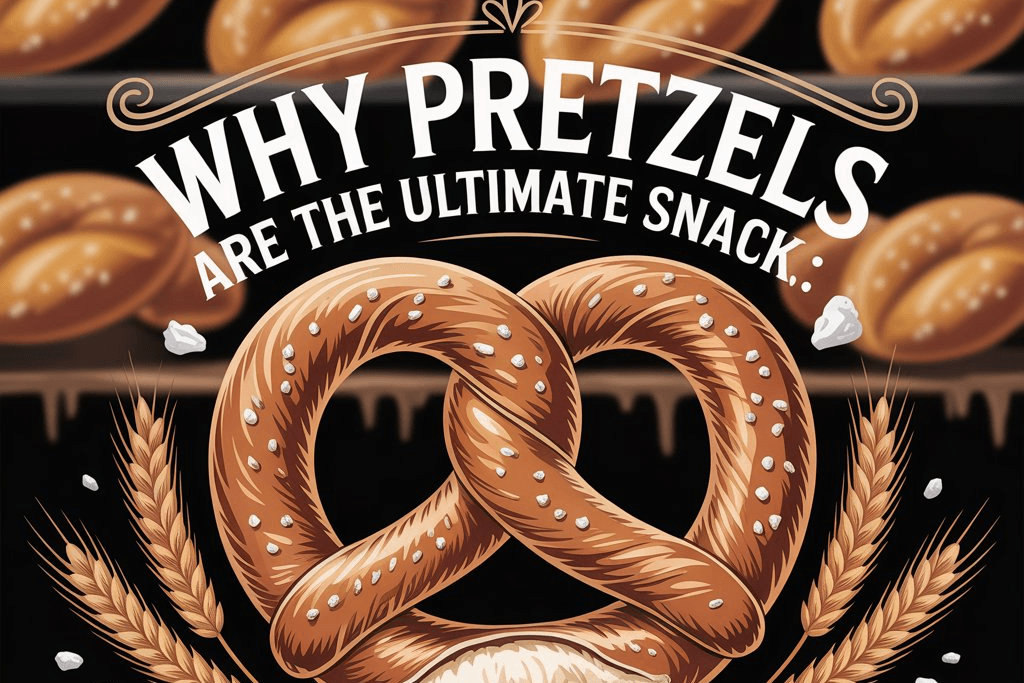
Enter the pretzel: that humble, twisted wonder that’s been quietly outperforming every flashy competitor on the snack aisle for centuries. While chips scream for your attention with their garish packaging and candy bars seduce you with promises of chocolate bliss, pretzels sit there with understated confidence, knowing they’re the smarter choice. And today, I’m here to make the case that pretzels aren’t just a good snack—they’re the best snack, period.
The Nutritional Case: When Healthy Doesn’t Mean Boring
Let’s start with the elephant in the room: nutrition. Most snacks fall into one of two categories. Either they’re delicious but absolutely terrible for you, or they’re healthy but taste like cardboard. Pretzels? They’ve somehow managed to thread the needle between these extremes, offering genuine satisfaction without the nutritional devastation.
Consider your average serving of pretzels compared to potato chips. A one-ounce serving of pretzels contains roughly 110 calories and less than one gram of fat. Compare that to the same serving of potato chips, which packs around 150-160 calories and a whopping 10 grams of fat. That’s a difference of nearly 1,000% in fat content. And we’re not talking about those “good fats” nutritionists are always telling you to eat more of—we’re talking about the kind of fat that comes from deep-frying potatoes in oil until they’re crispy enough to cut the roof of your mouth.
But pretzels’ nutritional superiority doesn’t stop at fat content. Unlike candy bars that send your blood sugar on a roller coaster ride to nowhere good, pretzels provide a more moderate source of carbohydrates. Yes, they’re still primarily carbs—no one’s claiming pretzels are a protein shake—but they digest more slowly than simple sugars, meaning you get sustained energy rather than a spike-and-crash scenario. You know that 3 PM slump when you’re desperate for something, anything, to keep you awake? A handful of pretzels will actually help, while a candy bar will make you crash harder than a narcoleptic sloth.
The salt content of pretzels often gets criticized, but here’s the thing: at least you know what you’re getting. That visible, sparkly salt on a pretzel’s surface isn’t hiding from you like the sodium lurking in processed crackers or the sugar bombs masquerading as granola bars. Plus, for active people or those living in hot climates, that sodium actually serves a purpose in replenishing what you lose through sweat. Are pretzels the perfect food? Of course not. But compared to cookies, which offer refined flour, excessive sugar, and often unhealthy fats all wrapped in a convenient circular package, pretzels look downright virtuous.
Versatility: A Snack for Every Mood and Moment
Here’s where pretzels truly shine: their almost absurd versatility. Name another snack that can seamlessly transition from movie theater to beer garden to airplane to kindergarten classroom to sophisticated cocktail party without missing a beat. I’ll wait.
Pretzels come in more forms than seems physically possible for a single snack category. You’ve got your classic hard pretzels in those beautiful twisted shapes, mini pretzel twists for snacking by the handful, pretzel sticks for dipping, pretzel rods for when you need something more substantial, and soft pretzels for when you want to feel like you’re at a baseball game or German beer hall. Then there’s the flavor spectrum: traditional salted, honey wheat, cinnamon sugar for the sweet-toothed, everything bagel seasoning for the adventurous, buffalo style for heat seekers, and even chocolate-covered for those who want dessert but with some structural integrity.
This versatility extends to how pretzels function in your culinary life. They’re not just a standalone snack—though they excel at that. Crush them up and they become a coating for chicken that’s somehow better than breadcrumbs. Use them as a pie crust and you’ve got a sweet-and-salty masterpiece. Throw them in a snack mix and they’re the MVP that holds everything together. Try doing any of that with a chocolate bar and you’ll quickly realize that most snacks are one-trick ponies.
The genius of pretzel versatility also shows up in portion control—a concept that’s completely foreign to chips and cookies. Because pretzels come in so many distinct shapes and sizes, you can actually choose your commitment level. Want just a light snack? Grab a few mini twists. Need something more substantial? A soft pretzel has you covered. Compare this to opening a bag of chips, where the only portion control is “oops, I ate the whole bag” or “I showed superhuman restraint and ate three-quarters of the bag.”
A History Worth Celebrating
While potato chips were invented by accident when a chef got annoyed at a customer in 1853, pretzels have a history that dates back over 1,400 years. Legend has it that Italian monks created the first pretzels around 610 AD, shaping them to resemble arms crossed in prayer and giving them to children as rewards for learning their prayers. Whether or not this origin story is entirely accurate, it speaks to the cultural staying power of this snack.
Pretzels immigrated to America with German and Pennsylvania Dutch settlers, who recognized quality when they saw it. By the 19th century, pretzel bakeries were thriving in Pennsylvania, and the snack became woven into American culture. This isn’t just “been around for a while” status—this is “survived more than a millennium because people genuinely loved them” status. The longevity alone should tell you something. Fads come and go (remember when everyone was obsessed with rice cakes?), but pretzels have remained relevant through plague, war, countless food trends, and even the invention of corn chips.
There’s also something to be said for the cultural significance of pretzels across different contexts. In Germany, pretzels are so important that bakers have their own guild symbol: a pretzel. At American baseball games, soft pretzels are as traditional as hot dogs and Cracker Jacks. During Lent, pretzels have religious significance as a food free from eggs, butter, and milk. This deep cultural embedding means pretzels carry memories and meaning that transcend mere snacking—they’re part of our collective experience in a way that a bag of Cheetos, no matter how delicious, simply isn’t.
The Sensory Experience: Texture Matters
Let’s talk about something often overlooked in snack discourse: the actual experience of eating. Pretzels deliver a sensory satisfaction that most snacks can’t match, and it all comes down to texture.
That initial crunch when you bite into a hard pretzel is deeply, primally satisfying. It’s not the greasy shatter of a potato chip or the immediate dissolve of a cheese puff—it’s a substantial, genuine crunch that makes you feel like you’re actually eating something. Your jaw has to work a little bit. You can’t mindlessly inhale pretzels the way you can with popcorn; each pretzel demands a modicum of attention and effort. This isn’t a bug—it’s a feature. The slightly labor-intensive nature of eating pretzels means you eat more slowly, which means you actually taste what you’re eating and feel more satisfied with less.
Then there’s the chewiness factor. A good hard pretzel has just enough give after that initial crunch. It’s not tooth-breaking hard like some crackers, but it’s not soft and immediately forgettable either. You get layers of texture as you chew, and that combination of crunch and slight chewiness creates a more complex eating experience. Your mouth stays engaged throughout.
Soft pretzels take the texture game in a completely different direction but are equally impressive. The outside has that slight resistance and chewiness, while the inside is pillowy and tender. The contrast between the denser crust and softer interior creates textural interest that keeps you coming back for another bite. And if you get that soft pretzel warm—which is obviously the ideal state—you’re dealing with an entirely different level of snack sophistication.
Compare this to cookies, which basically turn to mush the moment they hit your tongue, or chocolate bars, which melt into uniform smoothness. There’s no journey with those snacks, no evolution of texture. They’re one-note wonders. Pretzels, on the other hand, give your mouth something to think about.
Practical Advantages: The Snack That Makes Life Easier
Beyond taste and nutrition, pretzels win on pure practicality. These are the little quality-of-life improvements that matter when you’re actually living with your snack choices day in and day out.
First, there’s shelf stability. Pretzels are basically immortal. Keep them in a sealed bag or container, and they’ll outlast most other snacks by a significant margin. Chips go stale and lose their crunch within days of opening. Cookies dry out or, conversely, get weirdly soft. Chocolate melts if you so much as think about warm weather. Nuts go rancid. Pretzels? They maintain their integrity like stoic sentinels. You can throw a bag of pretzels in your desk drawer, your glove compartment, your gym bag, or your emergency preparedness kit, and they’ll be just as good six months later as they were on day one.
This stability makes pretzels the ultimate convenience snack. They don’t need refrigeration. They travel well. They don’t make a mess—there’s no grease coating your fingers like with chips, no chocolate smudging on everything you touch, no cookie crumbs creating a trail of evidence everywhere you go. Sure, pretzels can drop a little salt, but we’re talking about a salt crystal or two, not the crime scene that results from eating a powdered donut in your car.
The cost-effectiveness of pretzels also deserves recognition. Pound for pound, pretzels give you more bang for your buck than most snacks. A large bag of pretzel twists costs roughly the same as a much smaller bag of nuts or fancy chips, and significantly less than the per-serving cost of chocolate bars or cookies. When you factor in their shelf stability—meaning you’re not throwing away stale product—the value proposition becomes even more compelling. In an era of shrinkflation where your favorite snacks are quietly getting smaller while maintaining the same price, pretzels remain one of the best values in the snack aisle.
Health Advantages: The Better Choice for Your Body
We touched on nutrition earlier, but let’s dig deeper into the actual health implications of choosing pretzels over alternatives. This isn’t about being a perfect health food—it’s about being the better option when you inevitably need a snack.
Digestibility is a huge factor that often gets overlooked. Pretzels are made from simple ingredients: flour, water, yeast, and salt. Your digestive system knows what to do with these components because humans have been eating bread for thousands of years. Compare this to modern ultra-processed snacks with their litany of unpronounceable ingredients, preservatives, artificial flavors, and modified food starches. Your gut has to work harder to process all that chemical innovation, which is why you might feel bloated or uncomfortable after demolishing a bag of chips but feel relatively fine after eating pretzels.
For people with certain dietary restrictions or sensitivities, pretzels also tend to be more accommodating. While they’re not gluten-free (and I’m not going to pretend they are), they’re typically dairy-free and egg-free, which makes them suitable for people with those specific allergies. Many pretzel brands are also vegan by default—something you can’t say about cookies or most chocolate products. This makes pretzels a safer choice for gatherings where dietary restrictions might be in play.
The satiety factor is another health advantage. Because pretzels require more chewing and digesting than many alternatives, they’re more filling relative to their calorie content. You’ll feel satisfied with a reasonable portion of pretzels in a way that doesn’t happen with cotton candy or other snacks that are essentially air with flavoring. This increased satiety means you’re less likely to overeat, which means better weight management without having to rely on willpower alone. Any snack that helps you eat less without feeling deprived is a win.
Let’s also address the elephant in the room: pretzels won’t rot your teeth the way candy will. The absence of sugar means you’re not creating an acid bath in your mouth every time you snack. Your dentist will appreciate your pretzel habit far more than your gummy bear addiction.
The Social Appeal: A Snack That Brings People Together
There’s something inherently communal about pretzels that other snacks lack. Picture a bowl of pretzels at a party versus a bowl of nuts or chips. The pretzels disappear faster, and here’s why: they’re universally acceptable.
Pretzels don’t offend anyone. They’re not too spicy, too sweet, too messy, or too weird. Your health-conscious friend will eat them. Your junk-food-loving buddy will eat them. Kids love them. Adults appreciate them. They’re the Switzerland of snacks—neutral in the best possible way, which makes them the social glue that helps gatherings function.
This universal appeal extends to events and contexts. At a bar, pretzels are the classic accompaniment to beer because their saltiness complements rather than competes with the drink. At a kid’s birthday party, pretzels are a safe snack that won’t create a sugar-fueled chaos situation. On an airplane, pretzels are often the free snack because they check all the boxes: shelf-stable, inoffensive, unlikely to cause allergic reactions in other passengers, and satisfying enough to take the edge off hunger.
The nostalgic component of pretzels also can’t be ignored. For many people, pretzels are tied to happy memories: baseball games with Dad, movie nights with friends, school lunches, road trips. This emotional connection elevates pretzels beyond mere sustenance into something more meaningful. When you choose a pretzel, you’re not just choosing a snack—you’re tapping into a collective cultural memory bank of good times.
The Bottom Line: Pretzels Win
After examining pretzels from every angle—nutritional, practical, sensory, social, historical—the verdict is clear. Pretzels aren’t just competing with other snacks; they’re operating on a different level entirely.
Are there contexts where another snack might be more appropriate? Sure. If you’re truly hungry and need substantial calories and protein, a handful of nuts might serve you better. If you’re specifically craving chocolate and nothing else will do, a candy bar is what you need. But in the vast majority of snacking situations—when you want something satisfying, convenient, relatively healthy, affordable, and universally enjoyable—pretzels are the answer.
The beauty of pretzels is that they don’t try to be everything to everyone. They don’t promise to replace meals, transform your body, or deliver exotic flavor experiences. They simply deliver on what a good snack should be: tasty, satisfying, practical, and guilt-free enough that you can enjoy them without a side of regret. In a world of snacks that overpromise and underdeliver, pretzels are the steady, reliable friend who’s been there all along.
So the next time you’re standing in the snack aisle, scanning your options and trying to make a decision, consider the pretzel. Consider its centuries of proven appeal, its superior nutritional profile, its versatility, and its pure, uncomplicated deliciousness. Then grab that bag and twist open a better snacking experience. Your taste buds—and your body—will thank you.